

WHO Declares Ebola Outbreak in DRC and Uganda a Public Health Emergency of International Concern
CARPHA issues watching brief as Bundibugyo ebolavirus spreads across borders with 246 suspected cases and 80+ deaths
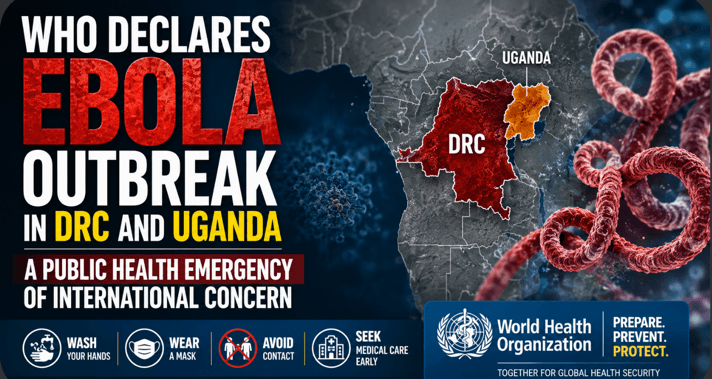
The Caribbean Public Health Agency (CARPHA) has issued a watch brief following the World Health Organisation's (WHO) declaration on 17 May 2026 that the ongoing Ebola Virus Disease (EVD) outbreak affecting the Democratic Republic of the Congo (DRC) and Uganda is now a Public Health Emergency of International Concern (PHEIC). The outbreak is caused by the Bundibugyo ebolavirus, a relatively rare strain for which there are no licensed vaccines or specific therapeutics.
Quick Facts
As of 16 May 2026, reports indicate there are 8 laboratory-confirmed cases in DRC and Uganda, 246 suspected cases, and more than 80 suspected deaths. The outbreak is primarily concentrated in Eastern DRC, particularly in Ituri Province, with additional confirmed cases reported in Uganda. The evolving epidemiological situation, population mobility, insecurity in affected areas, and delayed detection of cases increase the risk of further spread nationally and internationally.
The first known suspected case developed symptoms on 24 April 2026 in DRC and later died in Bunia. On 5 May 2026, rapid response teams began investigating the outbreak in Mongbwalu and Rwampara health zones. Laboratory testing confirmed the outbreak as Bundibugyo virus disease (BVD) on 15 May 2026, prompting DRC to officially declare its 17th Ebola disease outbreak. Uganda confirmed its first imported case linked to DRC on the same day, followed by a second imported case in Kampala with no known link to the first case.
CARPHA assesses the current risk to the Caribbean as low. However, given that the primary pathway for potential introduction remains through travel-associated importation and the region's high connectivity through international travel, enhanced and sustained readiness at points of entry and within national surveillance systems is necessary. Ebola transmission requires close physical contact with symptomatic individuals or contaminated materials, and there are no known direct widespread epidemiological links between affected areas and the Caribbean region.
"The declaration of a PHEIC underscores the need for heightened international and regional vigilance and coordination given the dynamic epidemiological profile of the current outbreak."
— CARPHA Watching Brief
CARPHA has initiated several response measures, including enhanced risk-based travel history screening with IMPACS using the Advanced Passenger Information System (APIS), leveraging early warning systems such as the Tourism and Health Information System (THiS) and Caribbean Vessel Surveillance System (CVSS), and maintaining information updates from international partners, including WHO, PAHO, UKHSA, and CDC.
What This Means for Montserrat ResidentsThe risk of Ebola reaching Montserrat remains low, but residents should be aware of the situation as the Caribbean maintains high international travel connectivity.
CARPHA and regional health authorities have activated enhanced screening at points of entry using advanced passenger tracking systems to identify travellers from affected areas.
Residents travelling to or from the DRC or Uganda should be aware of the outbreak and follow any travel advisories issued by health authorities. Early symptoms of Ebola include fever, severe headache, muscle pain, fatigue, and sore throat.
Source: Caribbean Public Health Agency (CARPHA) - Watching Brief: Ebola in DRC and Uganda, 18 May 2026 |
Stay up to date with our local news!
Get articles like this delivered to your inbox.
Subscribe Now
0 Comments
Join the conversation
Be the first to comment
Share your thoughts above.